Travel Security Guide: Avoid Scams & Stay Safe Abroad
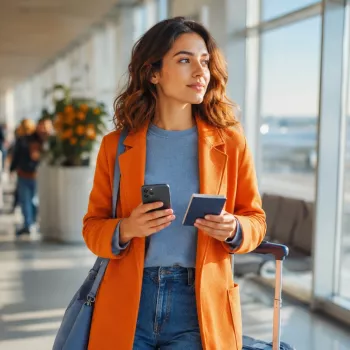
Travel Security & Scam Awareness Guide: Digital Safety Handbook for Tourists, Solo Travelers & Business Trips
Travel plans are easiest to enjoy when accounts, devices, documents, and money stay under control. This guide lays out practical steps to reduce scam risk, protect personal data on the move, and respond quickly if something goes wrong—whether traveling for leisure, alone, or for work.
What changes when traveling: risk hotspots and attacker goals
Travel creates short-term routines that are easy to predict: airport security lines, hotel check-ins, transit hubs, conferences, and nightlife districts. Those moments also create urgency and distraction—exactly what scammers and opportunistic thieves rely on. “Official” pressure (uniforms, clipboards, confident directions) can push quick decisions before you’ve verified what’s happening.
Digital risk rises when you’re on shared networks (public Wi-Fi, hotel routers), using shared devices (kiosk computers, hotel TVs), or simply charging in unfamiliar places. The usual outcomes are straightforward: stolen credentials, payment fraud, SIM swap/account takeover, device theft, and identity exposure.
Pre-trip setup: secure accounts, devices, and documents
A strong travel posture starts before the suitcase is packed. The goal is to reduce what can be taken, and make recovery fast if it is.
- Turn on multi-factor authentication for email, banking, and social accounts; store backup codes offline (printed or in a secure note stored locally).
- Use a password manager and change any reused passwords before departure (email first, since it resets everything else).
- Update operating systems and apps; enable device encryption and a strong screen lock (PIN or passphrase, not a simple pattern).
- Set up “Find My Device”/remote wipe and confirm it works; record device serial numbers.
- Create a travel-only email alias and a virtual card number (if your bank supports it) for bookings and one-off sign-ups.
- Prepare digital copies of passport/ID, visas, insurance, and itinerary; store in encrypted cloud plus an offline copy.
- Share a minimal itinerary with a trusted contact and set check-in expectations (especially for solo travel).
For a step-by-step checklist you can reuse for every trip, keep a copy of the Travel Security & Scam Awareness Guide (digital handbook) saved offline on your phone and in your email as an attachment.
Safe money and payments on the road
Most travel payment trouble comes from small moments: a rushed swipe, a compromised ATM, or agreeing to a “helpful” conversion screen. Reduce exposure with a few defaults.
- Prefer tap-to-pay and virtual card numbers over swiping; avoid handing cards out of sight.
- Use bank ATMs in controlled locations; inspect for tampering; cover PIN entry.
- Keep a small “decoy” cash amount separate from your primary wallet.
- Enable transaction alerts and card controls (freeze, spending limits, foreign use).
- Avoid dynamic currency conversion at terminals; choose local currency unless the total cost is clearly favorable.
When planning budgets and routines for travel and daily life, the Essential Adult Skills Guide for practical routines and decision-making can help standardize habits (alerts, spending rules, and quick verification steps) so they’re automatic under stress.
Common travel scams and how to respond
Scams vary by city, but the patterns repeat: urgency, authority, and distraction. When something feels rushed, slow it down and move to a more controlled environment (staffed counter, well-lit lobby, official app).
Fast recognition guide: red flags and best next action
| Situation | Red flags | Best next action |
|---|---|---|
| Public Wi-Fi login page asks for email/password | Requests account credentials; unusual domain; certificate warning ignored | Disconnect; use mobile hotspot/VPN; change password if entered |
| ATM looks normal but card feels resisted | Loose parts; misaligned keypad; “helpful” stranger approaches | Cancel transaction; use another ATM inside a bank; notify bank if card captured |
| Taxi driver claims meter is broken | No posted fare; refusal to use app; pressure to agree quickly | Exit safely; use official taxi stand or ride-hail; share trip details with a contact |
| Message says booking will be canceled unless paid now | Urgency; odd payment method; mismatched sender address | Contact provider via official site/app; do not reply to the message |
| QR code on a table directs to payment | Sticker placed over original; shortened URL; asks to sign in | Use restaurant’s official site/app; ask staff for a printed menu or verified link |
Digital safety while in transit and at the hotel
Solo traveler safety: boundaries, location sharing, and low-profile habits
Business travel security: protecting work devices and company data
If something goes wrong: a 30-minute incident plan
Quick packing checklist for safer travel
Digital handbook download: what the Travel Security & Scam Awareness Guide includes
The Travel Security & Scam Awareness Guide (digital handbook) is designed for quick reference while you’re moving: pre-trip hardening, scam recognition patterns, solo routines, business trip safeguards, and incident-response pages you can follow even when tired or rushed.
For authoritative updates and advisories, check U.S. Department of State — International Travel, scam reporting guidance from the Federal Trade Commission, and practical cyber hygiene tips from CISA.
FAQ
Is public Wi‑Fi ever safe to use while traveling?
Use public Wi‑Fi for low-risk browsing only. Avoid sensitive logins unless you’re using a trusted VPN and you see HTTPS; turn off auto-join and forget the network after you’re done.
What should be done first if a phone is lost or stolen abroad?
Mark the device as lost and remote lock or wipe it if possible. Then contact your carrier to block the SIM, reset key passwords starting with email, and freeze cards to prevent fast-moving fraud.
How can solo travelers reduce scam risk without seeming unfriendly?
Use short, firm refusals and keep moving toward staffed or crowded areas. Don’t share lodging details, keep a simple check-in plan with a trusted contact, and store backup cash/card separately from your main wallet.











Leave a comment